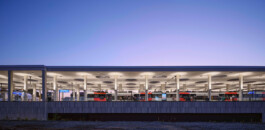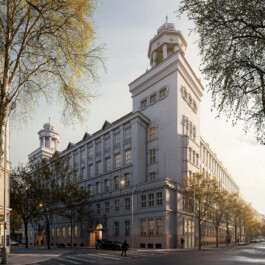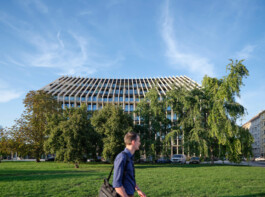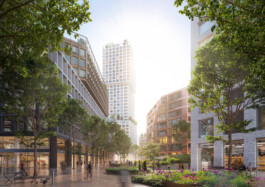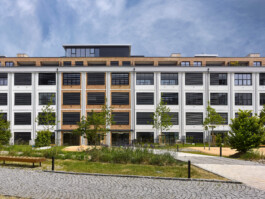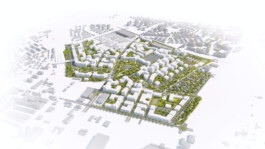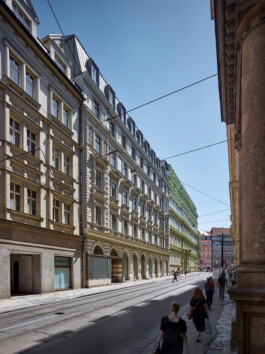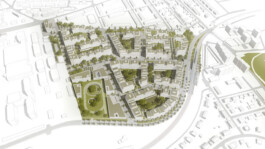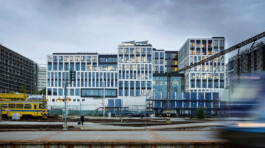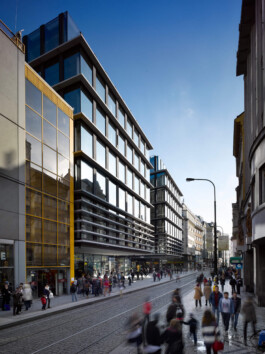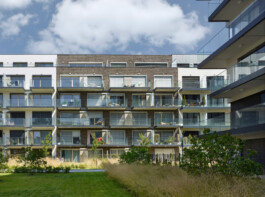
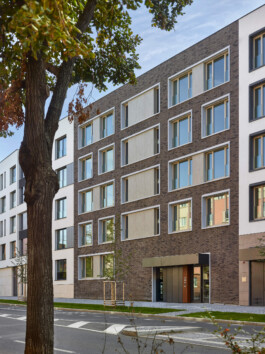
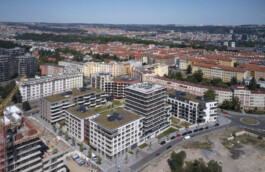
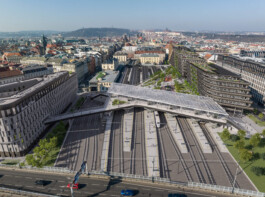
The northern part of the former Žižkov Freight Railway Station complex is being transformed into a new urban quarter. On the site of what was once an enclosed industrial area, a group of five blocks is emerging, extending the existing urban fabric along Jana Želivského and Olšanská streets and completing the missing quadrant of Basilejské náměstí. On the southern side, the new buildings form a counterpart to the historic freight station building.
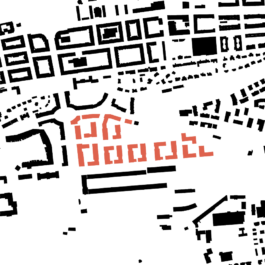
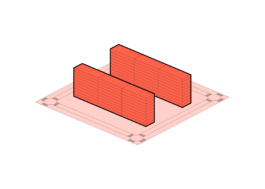
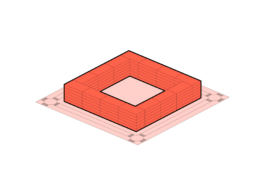
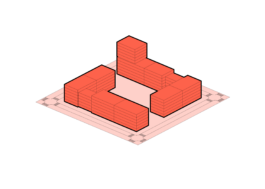
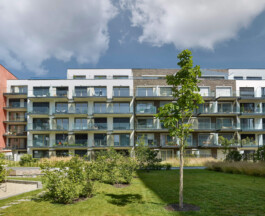
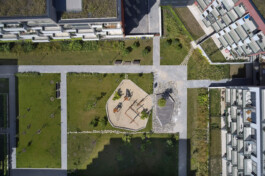
The urban design draws on the perimeter block structure typical of Vinohrady and Žižkov, while adapting it to contemporary housing needs. We have transformed the traditional enclosed blocks into open courtyard blocks that admit more light, air and greenery. This approach not only improves the quality of housing but also gives rise to a richer hierarchy of public and private spaces.
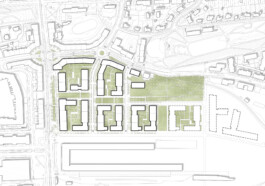
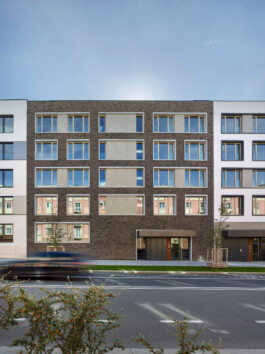
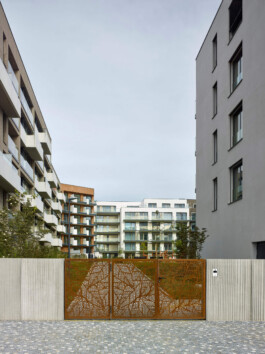
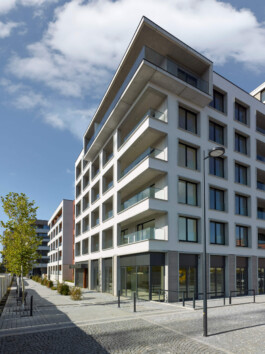
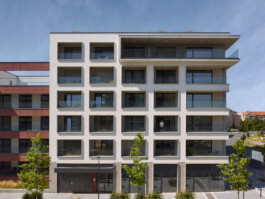
In terms of massing, each block is subdivided into several residential buildings with an average height of around six storeys. The volumes of the individual buildings are differentiated in height, echoing the naturally evolved block development characterised by diversity in both style and scale. Each block also features a twelve-storey landmark element that rises above the surrounding average building height, accentuating the central part of the site.
sídliště 2.pol. 20. století
+ větší podíl veřejné zeleně
- nevytváří uliční prostor
blok 19. století
+ vytváří živé uliční prostranství a klidný vnitroblok
- neplní platné hygienické požadavky
polootevřený blok
+ eliminuje nevýhody předchozích typů zástavby a soustředí jejich klady


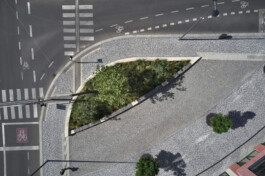
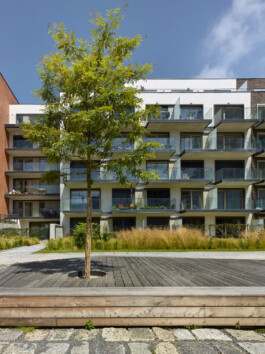
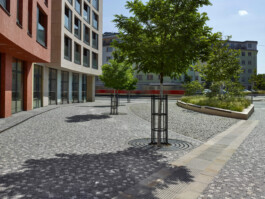
Running east to west through the site is a "green" axis – a public space with a higher proportion of planting and water features, serving as a tranquil recreational zone for both residents and the wider public. The green axis passes through the heart of the entire site, where it opens out at the intersection with a perpendicular street to form a small square that serves as the local centre of the newly built quarter.


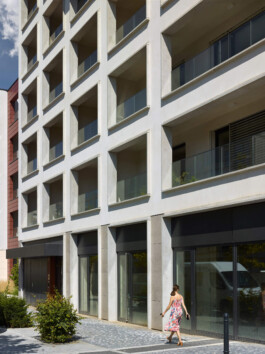
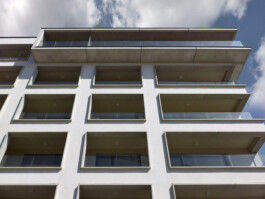
In addition to the urban masterplan, JCA acts as lead architect, as the author of the ground-floor and landscaping design, and as the designer of the architectural façades for selected buildings. Eight different architectural practices were invited to design the façades of the remaining buildings within the site, ensuring architectural diversity across the area. The appearance of the locality is thus the work of multiple teams.


| Základní údaje | Název | Parková čtvrť |
| Kód | 412 | |
| Rok | 2025 | |
| Místo | Praha, Česká republika | |
| Autoři | Odpovědný architekt | doc. Ing. arch. Jakub Cigler |
| Architekt projektu | Mgr. A. Ondřej Hrozinka | |
| Hlavní inženýr projektu | Ing. Aleš Raimr | |
| Tým | Mgr.A. Jan Hofman; Ing. arch. Hana Lukešová; B. Arch Peter Bednar; MgA. Pavel hrubý; Ing. arch. Ilia Charushin; Ing. arch. Michal Nácovský; Ing. Eva Neumannová; MgA. Kateřina Pazourková; Ing. Pavel Prchal, MSc. Anna Salingerová; Ing. arch. Petr Šusta; Ing. arch. Lukáš Vacovský; Ing. Martin Vítek; Ing. Klára Poskočilová; Ing. Roman Šubrt; Ing. Jan Krátký; Ing. Zdeňka Chvátalová | |
| Parametry | Celková plocha řešeného území | 68720 m² |
| HPP | 148600 m² | |
| Realizace | Stav | 2025 realizace 1. fáze |
| Klient | Hlavní město Praha | |
| Soutěž / ocenění | ||
| Dokumentace | Fotograf projektu | Filip Šlapal |

The northern part of the former Žižkov Freight Railway Station complex is being transformed into a new urban quarter. On the site of what was once an enclosed industrial area, a group of five blocks is emerging, extending the existing urban fabric along Jana Želivského and Olšanská streets and completing the missing quadrant of Basilejské náměstí. On the southern side, the new buildings form a counterpart to the historic freight station building.

The urban design draws on the perimeter block structure typical of Vinohrady and Žižkov, while adapting it to contemporary housing needs. We have transformed the traditional enclosed blocks into open courtyard blocks that admit more light, air and greenery. This approach not only improves the quality of housing but also gives rise to a richer hierarchy of public and private spaces.


sídliště 2.pol. 20. století
+ větší podíl veřejné zeleně
- nevytváří uliční prostor
blok 19. století
+ vytváří živé uliční prostranství a klidný vnitroblok
- neplní platné hygienické požadavky
polootevřený blok
+ eliminuje nevýhody předchozích typů zástavby a soustředí jejich klady
In terms of massing, each block is subdivided into several residential buildings with an average height of around six storeys. The volumes of the individual buildings are differentiated in height, echoing the naturally evolved block development characterised by diversity in both style and scale. Each block also features a twelve-storey landmark element that rises above the surrounding average building height, accentuating the central part of the site.
Running east to west through the site is a "green" axis – a public space with a higher proportion of planting and water features, serving as a tranquil recreational zone for both residents and the wider public. The green axis passes through the heart of the entire site, where it opens out at the intersection with a perpendicular street to form a small square that serves as the local centre of the newly built quarter.
| Základní údaje | Název | Parková čtvrť |
| Kód | 412 | |
| Rok | 2025 | |
| Místo | Praha, Česká republika | |
| Autoři | Odpovědný architekt | doc. Ing. arch. Jakub Cigler |
| Architekt projektu | Mgr. A. Ondřej Hrozinka | |
| Hlavní inženýr projektu | Ing. Aleš Raimr | |
| Tým | Mgr.A. Jan Hofman; Ing. arch. Hana Lukešová; B. Arch Peter Bednar; MgA. Pavel hrubý; Ing. arch. Ilia Charushin; Ing. arch. Michal Nácovský; Ing. Eva Neumannová; MgA. Kateřina Pazourková; Ing. Pavel Prchal, MSc. Anna Salingerová; Ing. arch. Petr Šusta; Ing. arch. Lukáš Vacovský; Ing. Martin Vítek; Ing. Klára Poskočilová; Ing. Roman Šubrt; Ing. Jan Krátký; Ing. Zdeňka Chvátalová | |
| Parametry | Celková plocha řešeného území | 68720 m² |
| HPP | 148600 m² | |
| Realizace | Stav | 2025 realizace 1. fáze |
| Klient | Hlavní město Praha | |
| Soutěž / ocenění | ||
| Dokumentace | Fotograf projektu | Filip Šlapal |