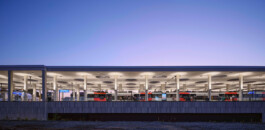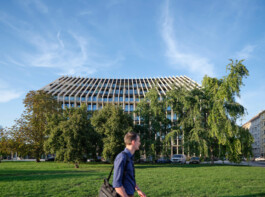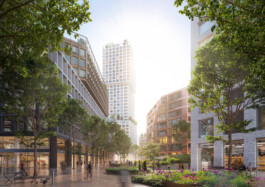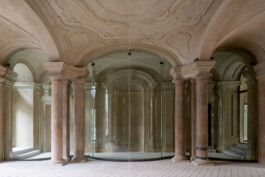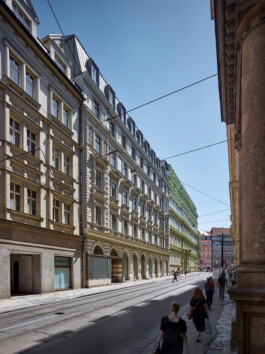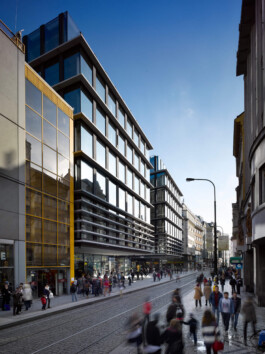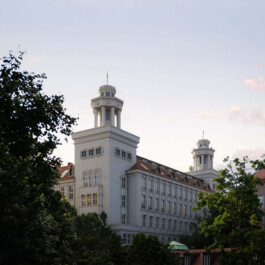
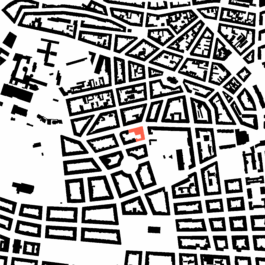

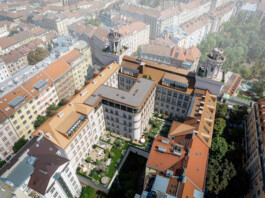
The Prague telephone and telegraph exchange building was constructed in 1927 to a design by the prominent Czech architect Bohumír Kozák. It occupies more than half of a typical city block, bounded by Fibichova, Kubelíkova and Křížkovského streets in the Žižkov district of Prague. Due to technological advances, however, after nearly 90 years the building has lost its original purpose and now awaits a new use.
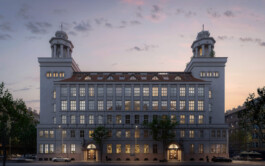
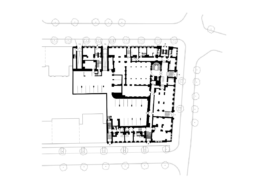
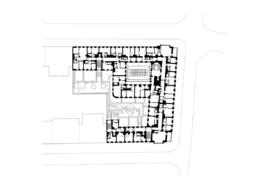
The investor's brief called for the conversion of the building to rental residential use, primarily owing to its location on the boundary between Prague's Vinohrady and Žižkov – two of the most sought-after residential areas. The generous proportions of the building will offer future residents a diverse and unconventional mix of residential units. By activating the ground floor, the building will naturally connect with the lively character of its surroundings and become part of it.
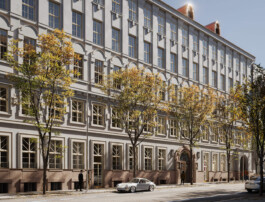
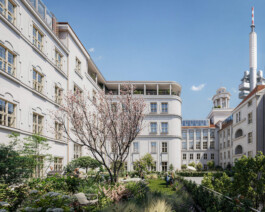
The impact of the conversion on the building's external appearance is addressed through two distinct approaches, depending on whether new elements are located on the prominent street-facing façades or on the façades facing the inner courtyard.
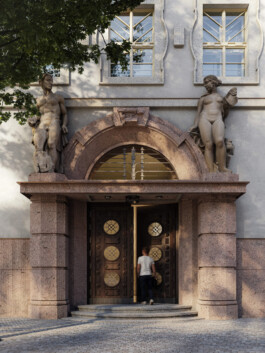
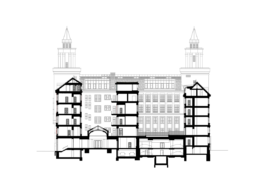
On the street side, the extent and impact of new elements on the building's appearance is minimal, limited to the addition of new entrances from Kubelíkova Street and the insertion of studio windows to bring daylight into the attic spaces.
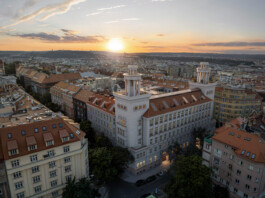
On the courtyard side, curved studio windows are used to illuminate the attic spaces. Their form draws on the soft lines – or rather the rounded elements – present in the building's original design. A further new element is the extension above the courtyard wing, conceived architecturally as a colonnaded gallery that references the formal vocabulary of the receding corner towers.
| Základní údaje | Název | Fibichova |
| Kód | 411 | |
| Rok | 2025 | |
| Místo | Praha, Česká republika | |
| Autoři | Odpovědný architekt | doc. Ing. arch. Jakub Cigler |
| Architekt projektu | Mgr. A. Ondřej Hrozinka | |
| Hlavní inženýr projektu | Ing. Vladimír Vacek | |
| Tým | Ing. arch. Michal Nácovský; Ing. arch. Antonín Štička; Ing. arch. Tereza Ciglerová; Mgr.A. Jan Hofman; Ing. arch. Hana Lukešová; Ing. arch. Vojtěch Klapač; Ing. arch. Jakub Lang; Bc. Diana Sherbyna; Oksana Kovtun; MSc. Anna Salingerová; Ing. arch. Zdeňka Barošová; Ing. arch. Pavel Vild; Ing. arch. Jan Vaško; Ing. Zdeňka Chvátalová; Ing. arch. Ilia Charushin; Bc. Tomáš Bašta | |
| Parametry | Celková plocha řešeného území | |
| HPP | 14150 m² | |
| Realizace | Stav | 2025 ve výstavbě |
| Klient | Hlavní město Praha | |
| Soutěž / ocenění | ||
| Dokumentace | Fotograf projektu | Dousek-Záborský |


The investor's brief called for the conversion of the building to rental residential use, primarily owing to its location on the boundary between Prague's Vinohrady and Žižkov – two of the most sought-after residential areas. The generous proportions of the building will offer future residents a diverse and unconventional mix of residential units. By activating the ground floor, the building will naturally connect with the lively character of its surroundings and become part of it.

On the street side, the extent and impact of new elements on the building's appearance is minimal, limited to the addition of new entrances from Kubelíkova Street and the insertion of studio windows to bring daylight into the attic spaces.


The impact of the conversion on the building's external appearance is addressed through two distinct approaches, depending on whether new elements are located on the prominent street-facing façades or on the façades facing the inner courtyard.

On the courtyard side, curved studio windows are used to illuminate the attic spaces. Their form draws on the soft lines – or rather the rounded elements – present in the building's original design. A further new element is the extension above the courtyard wing, conceived architecturally as a colonnaded gallery that references the formal vocabulary of the receding corner towers.


| Základní údaje | Název | Fibichova |
| Kód | 411 | |
| Rok | 2025 | |
| Místo | Praha, Česká republika | |
| Autoři | Odpovědný architekt | doc. Ing. arch. Jakub Cigler |
| Architekt projektu | Mgr. A. Ondřej Hrozinka | |
| Hlavní inženýr projektu | Ing. Vladimír Vacek | |
| Tým | Ing. arch. Michal Nácovský; Ing. arch. Antonín Štička; Ing. arch. Tereza Ciglerová; Mgr.A. Jan Hofman; Ing. arch. Hana Lukešová; Ing. arch. Vojtěch Klapač; Ing. arch. Jakub Lang; Bc. Diana Sherbyna; Oksana Kovtun; MSc. Anna Salingerová; Ing. arch. Zdeňka Barošová; Ing. arch. Pavel Vild; Ing. arch. Jan Vaško; Ing. Zdeňka Chvátalová; Ing. arch. Ilia Charushin; Bc. Tomáš Bašta | |
| Parametry | Celková plocha řešeného území | |
| HPP | 14150 m² | |
| Realizace | Stav | 2025 ve výstavbě |
| Klient | Hlavní město Praha | |
| Soutěž / ocenění | ||
| Dokumentace | Fotograf projektu | Dousek-Záborský |